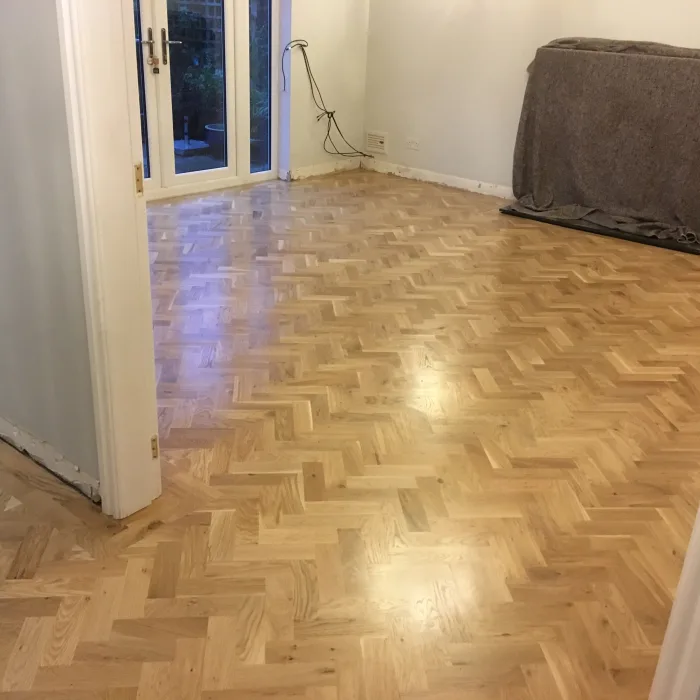
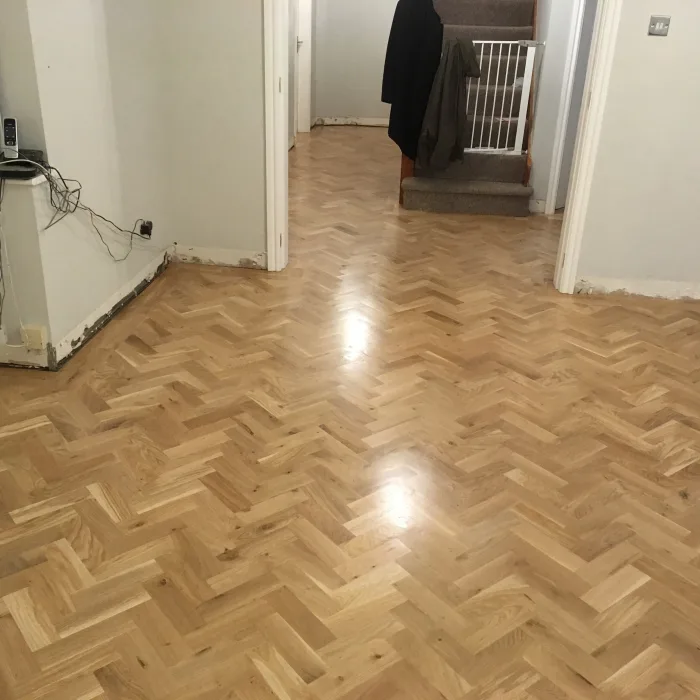
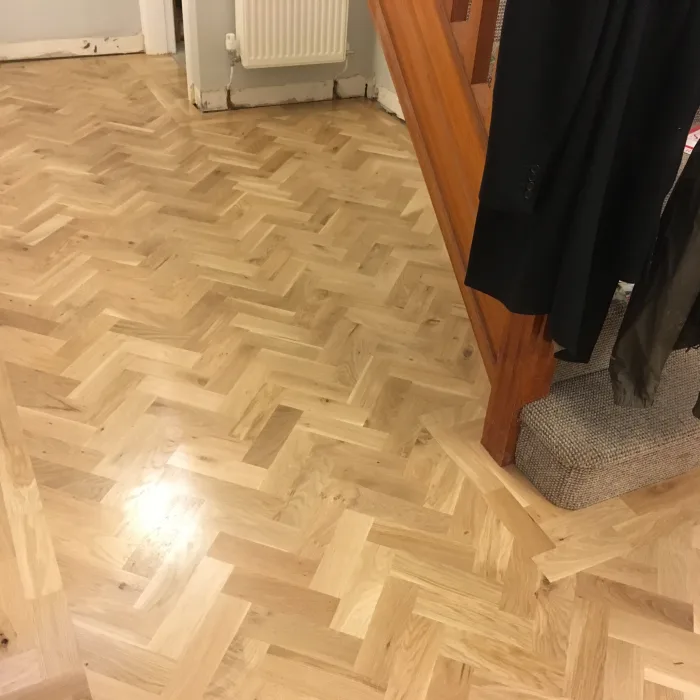
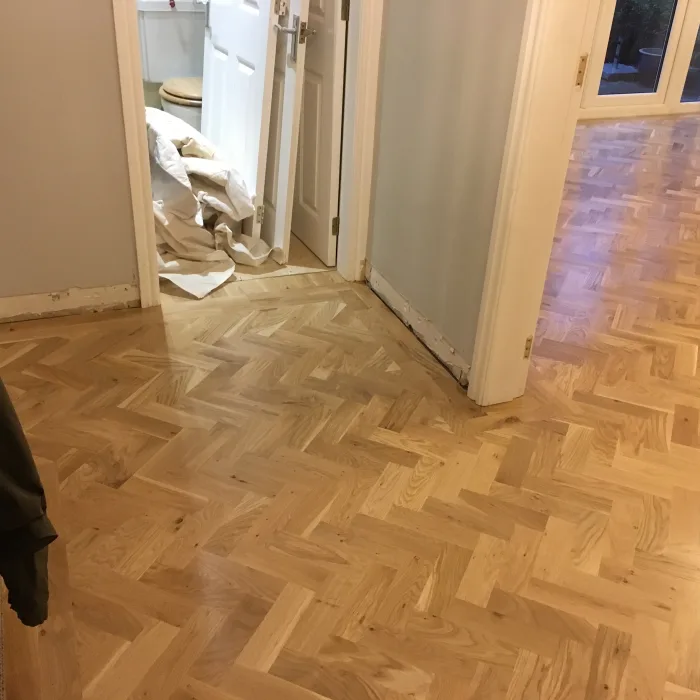
Parquet and herringbone
The work we are best known for. Blocks lifted, cleaned of old bitumen, re-laid where they are missing and sanded flat.
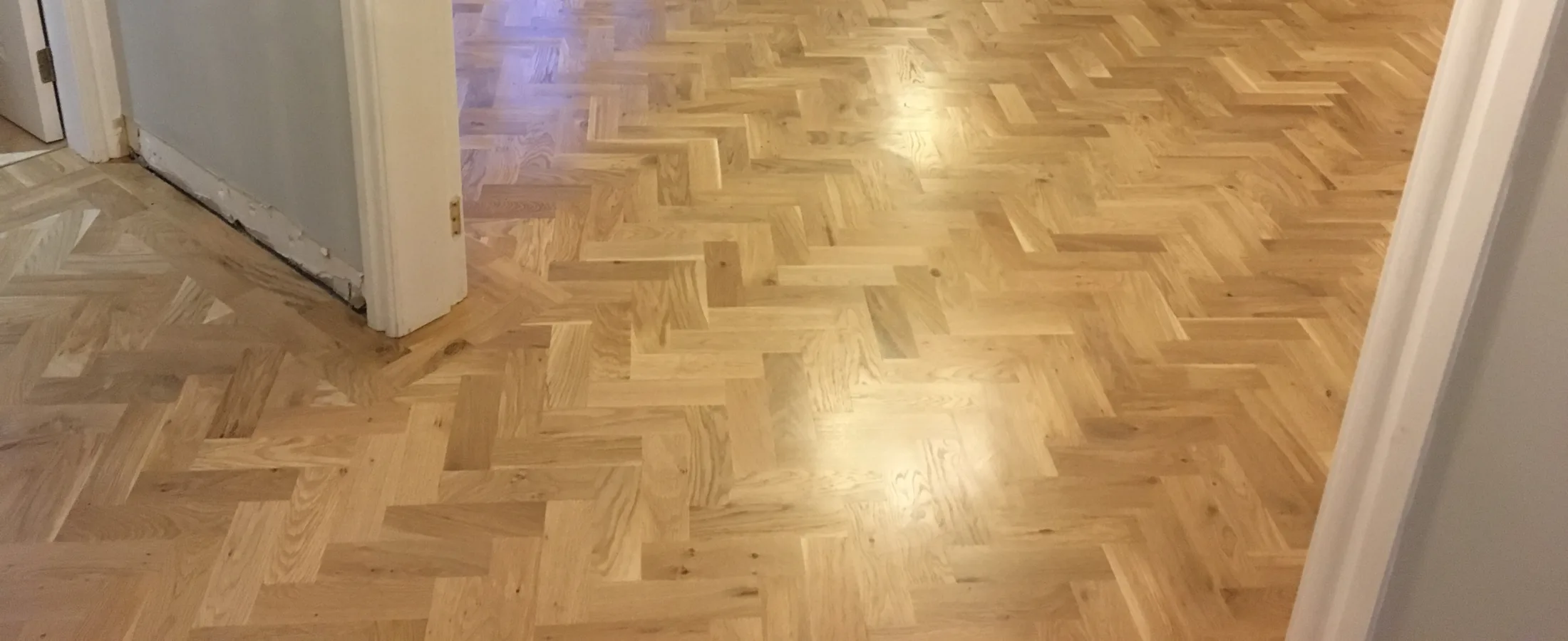
Home Restoration & sanding
BWFA certified, dust controlled, and done by the same people who lay new floors all week. Most tired floors are one sand away from looking brand new.
See the difference
What we restore
The work we are best known for. Blocks lifted, cleaned of old bitumen, re-laid where they are missing and sanded flat.
Oak, ash and pine boards taken back to bare timber, with damaged lengths cut out and matched rather than patched over.
Victorian and Edwardian boards, including lifting and re-fixing where the joists have moved and nails have worked loose.
Treads, risers and nosings, hand-finished where the machines cannot reach. Slip resistance is part of the finish choice here.
Large-area floors on a fixed programme, worked around services and term dates, with commercial-grade lacquers.
Bars, shops and offices, usually out of hours so the floor is walkable by the time the doors open.
The process
We lift a board or block where we can, check the wear layer, the sub-floor and the moisture content, and tell you what the floor will and will not take. This is also where we tell you if it is not worth doing.
Missing or loose parquet blocks are re-laid and matched, damaged boards are cut out and replaced, and the sub-floor is made sound. Sanding over a floor that still moves is a waste of everyone’s money.
We work through the grades from a coarse first cut to a fine finish, with continuous extraction running throughout. Edges and corners are done by hand so there is no halo left round the room.
Fine dust from your own floor is mixed with resin so the filler matches the timber instead of standing out. On floors that move seasonally we use slivers of matching wood, which stay put where resin would crack out.
The floor is coated in whichever finish suits how the room is actually used, then left to cure properly before the furniture goes back.
The British Wood Flooring Association certifies that the people cutting into your floor have been trained and assessed on it — moisture testing, sub-floor preparation, grading, finishing and the safe running of the machinery.
In practice it means you get a moisture reading before we quote rather than a guess, a finish specified for the traffic the room actually sees, and someone who knows when a floor should be left alone. It is the difference between a floor sanded once properly and a floor sanded twice.
Certificate number to be added once the client supplies it.
Finishes explained
There is no best finish, only the right one for the room. This is the conversation we would have with you at the measure, written down.
| Finish | Looks like | Best for | Upkeep | Repairs |
|---|---|---|---|---|
| Penetrating oil | Matt and natural. You feel the grain. | Living rooms, bedrooms, period floors | Re-oil every 1–2 years in busy rooms | Excellent — spot repair, no full re-sand |
| Hardwax oil | Matt to satin, slightly more sheen | Kitchens, hallways, family homes | Refresh coat every 2–4 years | Very good — blends into the surrounding area |
| Lacquer | Matt through to gloss, a film on top | Commercial, schools, rentals, pets | Nothing for years, then a full re-coat | Poor — scratches show and need the whole room |
An honest answer
Usually yes, and usually for less than replacing it. But not always, and we would rather tell you now than halfway through.
Questions
A picture of the worst patch is usually enough for us to say whether it is a sand, a repair or a replacement — before anyone books a visit.